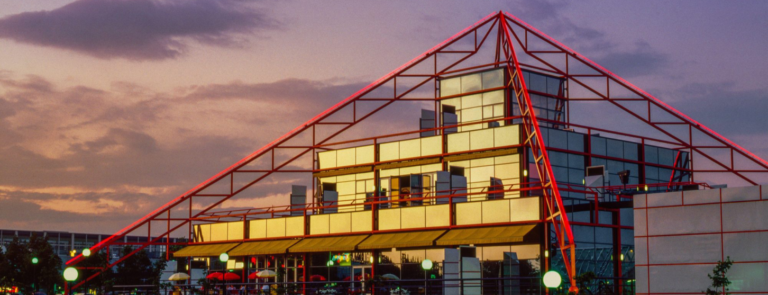
BBC show highlights the drastic health and productivity impacts of poorly designed spaces.
Inspired by insights from Building Soul by Thomas Heatherwick, this article explores how thoughtfully designed spaces can enhance wellbeing, focus and engagement.
A 3-factor checklist
What this means for events.
Any event experience can be evaluated against these insights into our human psyche. Questions to ask include:
- How coherent is the space and journey? Can individuals entering a space easily ‘read’ and explore, ensuring their brains are calmed and receptive.
- Is there appropriate design detail and decoration present to ensure that the environments created are sufficiently fascinating and complex to stimulate audiences?
- Does the space offer sufficiently cosy and welcoming areas so that attendees feel a sense of belonging and don’t secrete stress inducing cortisol?
The health importance of stimulating spaces.
Getting this right is very important. It ensures attendees experience more excitement, retain more of the messages they hear and are comfortable to stay longer. Cognitive neuroscience shows if we fail to stimulate, our response to bland, sterile environments is to zone out and describes our emotional state as “abject misery”.
Even worse Colin Ellard’s (University of Waterloo, Canada) experiments show “brain states plunge and are as far from arousal as it is possible to get while still being awake and alive”. The stress caused by bland environments even leads to the excretion of cortisol that when chronically high prompts metabolic and cardiac disorders and heart attacks.
The Chameleon approach.
These findings reaffirm the importance and responsibility we all have when designing spaces and hosting others. At Chameleon we always look to incorporate biophilic design in our work. This focuses on those aspects of the natural world that have contributed to human health and productivity. We look, for example, to include plants in a room, use patterns that mimic nature, deploy natural materials like wood and brick and maximise natural light. We also look for focal points to create areas of interest.
Chris Woodward, the architect famous for designing the Milton Keynes shopping centre, is quoted in Heatherwick’s episode 2. He argues, “cities are like a fruit loaf, essentially bread but containing some currants. We appreciate the currants because of the surrounding plainness of the bread in which they are embedded. If the fruit loaf was all just currants, it would be inedible”. We agree. At the heart of any of our designs we look to provide enough contrast to make key features stand out and the whole theme digestible.
So, in summary, our mission is clear. We combine creative design and technical production to beat the bland and deliver amazing and safe experiences. Now we have the scientific evidence to show the importance of this for attendees’ health and productivity and hosts’ ROI.